Look around you. Chances are, your world is filled. Your schedule is filled with meetings, your phone is filled with notifications, and your mind is filled with a never-ending to-do list. In Western culture, we are masters of addition. We believe that more is more: more productivity, more content, more noise. We see empty space and our first instinct is to fill it.
But what if the most powerful element in a room is the emptiness within it? What if the most profound part of a conversation is the silence between the words? What if true clarity isn’t found by adding more, but by embracing what isn’t there?
Welcome to the Japanese concept of Ma (間). It’s a word that’s notoriously difficult to translate, often described as “negative space,” an “interval,” or a “pause.” But Ma is so much more than mere emptiness. It is the intentional, meaningful space that gives shape and value to everything else. It’s the silence that makes music possible. It’s the pause that gives a speech its power. Today, we’ll explore this profound concept and discover how understanding Ma can bring a new dimension of calm and creativity into your busy life.
What is ‘Ma’? More Than Just Empty Space
To understand Ma, you must stop thinking of space as a void. In the Japanese aesthetic, Ma is a living, breathing element. It is the space between objects, the silence between sounds, and the stillness between actions. This “in-betweenness” is not passive; it is an active component that defines and enhances the whole.
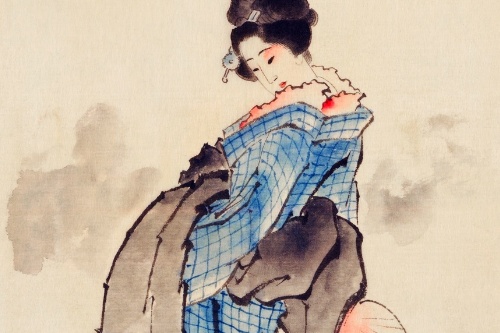
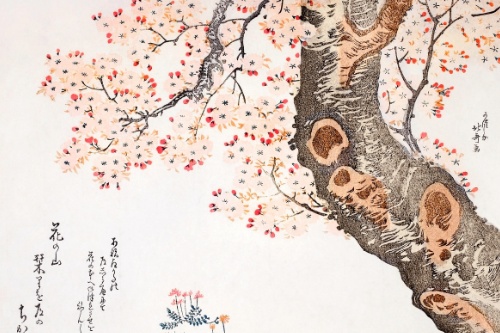
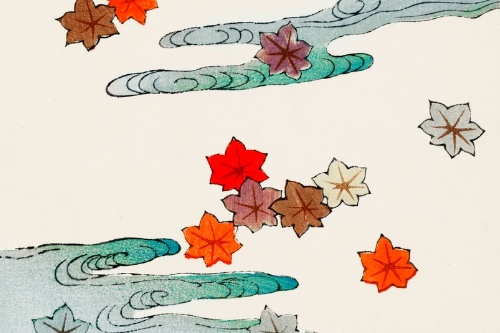
Imagine a powerful painting. Your eye is drawn to the subject, but it’s the empty space around it—the Ma—that gives the subject its presence and balance. Without that space, the painting would feel chaotic and suffocating. Ma is the conscious placement of nothing, which in turn creates everything.
This philosophy is woven into the very fabric of Japanese life, from its art and architecture to its human interactions.
Finding ‘Ma’ in Japanese Culture
Once you start looking for Ma, you’ll see it everywhere in Japan. It’s a quiet language spoken through form and stillness.
1. In Architecture and Interior Design
Walk into a traditional Japanese room (washitsu). You won’t find it cluttered with furniture. Instead, you’ll feel a sense of openness. The sliding paper screens (shoji) don’t just divide rooms; they create fluid spaces. The strategic placement of a single flower arrangement in an otherwise empty alcove (tokonoma) draws your full attention, its beauty amplified by the surrounding space. This isn’t minimalism for the sake of trends; it’s a deliberate use of Ma to create a tranquil, breathable environment.
2. In Conversation and Communication
In many Western cultures, silence during a conversation can feel awkward. We rush to fill the void. In Japan, however, Ma in conversation is a sign of respect and deep thought. A pause before answering a question indicates that you are giving the query the consideration it deserves. This silence isn’t empty; it’s filled with thought, respect, and unspoken understanding. It allows for a deeper, less reactive form of communication.
3. In the Arts
The role of Ma is perhaps most evident in Japan’s traditional arts:
- Ikebana (生け花): The art of flower arranging is not about how many flowers you can pack into a vase. It’s about the relationship between the flowers, stems, and the empty space around them. The Ma is as crucial as the flowers themselves in creating a harmonious composition.
- Shodō (書道): In calligraphy, the beauty of the characters is defined not just by the ink strokes, but by the white space of the paper left untouched. This “yohaku-no-bi” (beauty of empty space) is essential for balance and impact.
- Music: In traditional Japanese music, like that found in Noh theater, the silence between notes is often more emotionally charged than the notes themselves. It builds tension, creates drama, and allows the listener’s imagination to engage.
Why ‘Ma’ is a Superpower in Our Modern World

In our age of information overload and constant connectivity, the concept of Ma is more relevant than ever. We are drowning in noise, and our minds rarely get a moment of true stillness. Embracing Ma is an act of gentle rebellion against the cult of “busy.”
Here’s what inviting Ma into your life can do:
- Enhance Creativity: Ideas need space to grow. When your mind is constantly occupied, there is no room for inspiration to strike. Ma—whether a quiet walk, a moment of meditation, or just staring out a window—is the fertile ground for creativity.
- Improve Focus: By creating intentional space in your schedule and environment, you reduce distractions. This allows you to give your full, undivided attention to the task at hand, leading to deeper and more meaningful work.
- Deepen Relationships: By practicing Ma in conversations, you become a better listener. You give others the space to fully express themselves, and you give yourself the time to respond thoughtfully instead of reactively.
How to Create ‘Ma’ in Your Own Life
You don’t need to move to a Zen temple to benefit from this wisdom. You can start small:
-
- Practice the Art of the Pause: Before answering an email or responding in a meeting, take one conscious breath. This tiny sliver of Ma can change the entire tone of your interaction.
- Declutter One Small Space: Choose a single shelf, a tabletop, or a corner of your room. Remove everything, and then mindfully put back only the essentials. Enjoy the visual calm of the empty space.
– Take a “Ma Walk”: Go for a 10-minute walk without your phone, music, or a podcast. Just walk, and pay attention to the space around you and the sounds of the world.
- Schedule Nothing: Block out 15-30 minutes in your calendar and label it “Ma.” Use this time to do absolutely nothing productive. Sit, breathe, and just be.
The Emptiness Full of Possibilities
Ma teaches us a profound lesson: space is not a vacuum to be filled, but a canvas of possibility. It is the quiet framework that holds our loud, chaotic lives together.
By learning to appreciate and create space—in our homes, our schedules, and our minds—we don’t lose anything. Instead, we gain clarity, peace, and a deeper connection to the world around us. It’s in the space between the notes that music is born. And it’s in the space between our frantic actions that life itself can be truly felt.